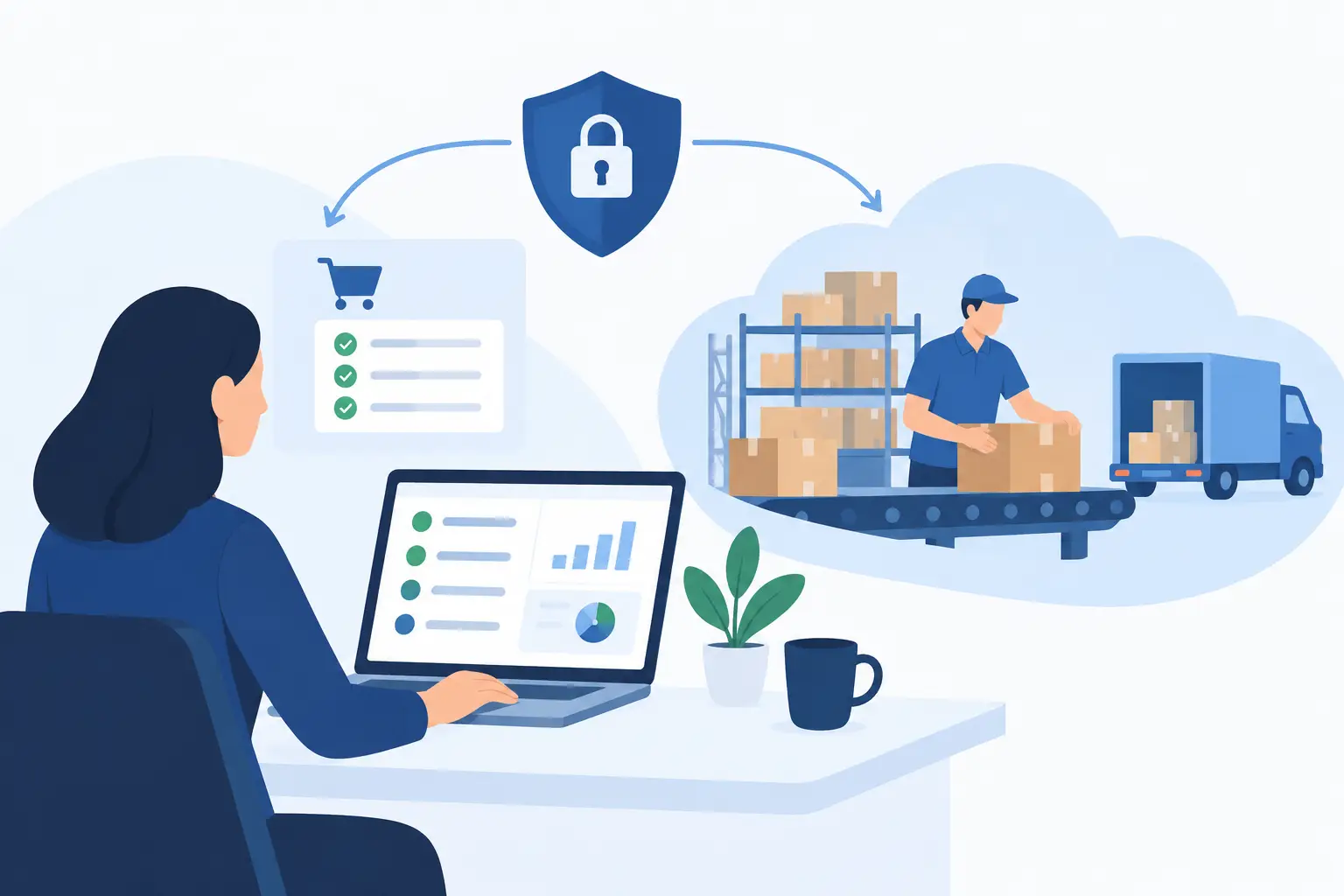

A late order is rarely just a late order. It becomes a support ticket, a refund request, a bad review, and a customer who may never buy again. Learning how to outsource order processing is about preventing that chain reaction while reducing the cost and pressure of running fulfillment operations in-house.
For growing ecommerce brands, retailers, distributors, and service businesses, order processing can quickly become a bottleneck. Your team is copying order details between systems, checking inventory, resolving address errors, creating shipping labels, chasing warehouse updates, and answering “where is my order?” emails. Those tasks are essential, but they do not always require expensive local headcount.
The right offshore order processing team gives you coverage, consistency, and room to scale. The wrong one creates more exceptions than it solves. Here is how to get it right.
What order processing can include
Order processing is more than clicking “fulfill” in an ecommerce platform. The scope depends on your business model, sales channels, warehouse setup, and customer promises.
A trained remote team can manage order entry, order validation, inventory checks, fraud flags, shipping label creation, warehouse coordination, return authorization, order status updates, and customer communication. For B2B businesses, they may also enter purchase orders, verify pricing, prepare invoices, update ERP records, and coordinate with account managers.
The smart move is not to outsource every task on day one. Start with the repetitive, rules-based work that is consuming internal time. Keep strategic decisions, unusual exceptions, and high-risk approvals with your internal leaders until the process is stable.
How to outsource order processing in 7 practical steps
1. Map the process before you hire
Do not hand a new team a messy process and expect lower costs to fix it. First, map what happens from the moment an order arrives to the moment it is confirmed, shipped, delivered, or escalated.
Document which platforms are used, who touches each order, what data must be checked, and what causes exceptions. Include the common problems: incorrect addresses, stockouts, payment holds, duplicate orders, split shipments, custom products, and delivery delays.
This does not need to become a 100-page operations manual. A clear workflow with screenshots, examples, and decision rules is enough to create a strong starting point. If your current team cannot explain how they process a difficult order, an outsourced hire will struggle too.
2. Decide what stays in-house
Outsourcing works best when accountability is clear. Your offshore team can own day-to-day execution, but your business should retain control over policies, customer promises, vendor relationships, and escalation decisions.
For example, an order processing specialist can flag a customer order with an invalid address and send a pre-approved request for clarification. They should not decide on their own to issue a large refund, override a fraud control, or promise an overnight replacement that destroys your margin.
Create an approval matrix. Define what your team can resolve independently, what requires a manager’s approval, and what needs immediate escalation. This protects the customer experience without forcing your leadership team into every minor decision.
3. Hire for systems thinking, not just data entry
Order processing looks simple until volume rises or systems stop matching. The best hires are detail-oriented, calm under pressure, confident with software, and capable of following a process without losing common sense.
Look for experience with the platforms your operation already uses, whether that is Shopify, Amazon Seller Central, WooCommerce, NetSuite, ShipStation, Salesforce, QuickBooks, or a proprietary ERP. Platform experience helps, but it is not the only factor. A sharp operator can learn new tools quickly if your workflows are documented and training is structured.
Ask candidates how they would handle an inventory mismatch, an order that appears twice, or a customer escalation that conflicts with policy. Their answer will tell you more than a typing test ever will.
4. Build training around real orders
Generic onboarding creates generic performance. Use real examples from your business, with sensitive data removed where necessary. Show new team members what a clean order looks like, what a risky order looks like, and how an exception should move through the business.
Start with supervised production. For the first week or two, let the offshore team process a controlled portion of daily volume while a team lead reviews work. This is the fastest way to identify unclear rules, missing permissions, and gaps in your documentation.
Record training sessions and turn repeated questions into simple standard operating procedures. Every question answered once in a documented workflow is time saved as your team grows.
5. Set measurable service levels from the start
If you only measure whether orders were processed, you will miss the problems that hurt revenue. Your performance standards should cover speed, accuracy, quality, and escalation discipline.
Track metrics such as order processing turnaround time, order entry accuracy, percentage of orders processed within your cutoff time, exception resolution time, cancellation rate, refund rate, and customer contacts related to order status. For businesses with strict fulfillment commitments, measure the number of orders missed before warehouse cutoff.
Targets should reflect your actual operation. A same-day processing target may be realistic for standard domestic orders but not for complex B2B orders requiring credit checks or inventory allocation. Be demanding, but be fair. Unrealistic targets encourage rushed work and hidden errors.
6. Give the team access without giving away the keys
Security matters because order processing often involves customer names, addresses, order values, and sometimes payment-related information. Use role-based permissions so each team member has access only to the systems and functions required for their role.
Avoid sharing master passwords or allowing staff to use personal accounts. Use company-managed credentials, multifactor authentication, password management tools, and clear offboarding procedures. Review access regularly, especially as responsibilities change.
Also consider operational continuity. If your entire order process depends on one person knowing how to handle exceptions, you have a staffing risk. Cross-train at least one backup team member and keep process documents current.
7. Manage the team like part of your business
Outsourcing does not mean disappearing. The strongest results come when offshore order processing staff are treated as an extension of your operation, not a disconnected vendor queue.
Give them daily priorities, a clear point of contact, and visibility into what good performance means. Short daily check-ins can be valuable during launch or high-volume seasons. Once the process is stable, weekly quality reviews and performance reporting may be enough.
Share context too. If a promotion is launching, inventory is constrained, or a warehouse is changing carriers, tell the team early. Order processors make better decisions when they understand the commercial impact of their work.
Choosing the right outsourcing model
You have two broad options: outsource to a transactional provider that handles work through a shared queue, or hire dedicated remote staff who work directly inside your systems and processes.
A shared service can be useful for low-volume, highly standardized work. It may be cheaper at the start, but you usually give up control, visibility, and process ownership. When your policies change or exceptions increase, that model can become frustrating quickly.
Dedicated offshore staff are often a better fit for businesses that want a real operating team. You set priorities, train them on your systems, and build institutional knowledge over time. A managed staffing partner handles recruitment, payroll, HR administration, and compliance support, while you retain control over the day-to-day work.
That is where a provider like Outsourcey can make a commercial difference. Rather than locking you into a rigid contract or forcing you through a lengthy local hiring cycle, you can build a Philippines-based team around the exact order processing capacity you need and scale headcount as volume changes.
Common mistakes that make outsourcing fail
The biggest mistake is treating outsourcing as a handoff instead of an operating decision. If your internal process is unclear, your systems are disconnected, or nobody owns quality control, offshore staff will inherit the same chaos.
Another problem is hiring too late. Businesses often wait until orders are already delayed and the internal team is burned out. That creates a rushed onboarding environment where new hires are expected to learn during a crisis. Start before your next promotion, seasonal spike, or warehouse transition.
Finally, do not choose solely on hourly rate. A lower-cost provider is not a win if inaccurate orders create refunds, chargebacks, and customer churn. The best value comes from capable people, clear accountability, and a model that lets you scale without adding unnecessary management burden.
Your order volume will not stay still. Build a team and process that can handle today’s demand, then add capacity before growth turns into operational drag. That is how outsourcing stops being a cost-cutting experiment and becomes a practical advantage.